"Manual therapy" and "massage" both involve skilled hands working on the body, so it's easy to assume they're the same thing. They overlap — but they have different goals. Understanding the difference helps you get the treatment that actually fits your needs.
What massage focuses on
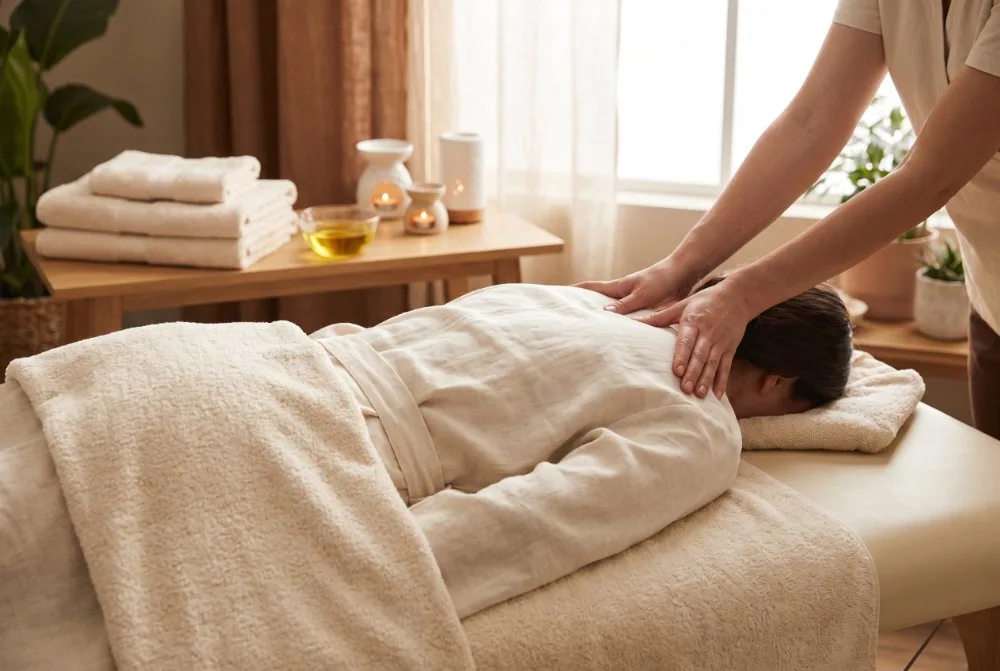
Massage works primarily with the soft tissues — muscles, tendons, and connective tissue. Its strengths are relieving muscle tension, improving circulation, reducing stress, and helping the nervous system relax. Techniques like Swedish, deep tissue, trigger point, and sports massage each target tension in different ways.
If your main issue is tight, sore, overworked muscles or you simply need to unwind and recover, massage is often the right tool.
What manual therapy focuses on
Manual therapy is a broader, more clinical approach used to restore movement and function. It includes hands-on techniques applied to joints and soft tissue to improve mobility, reduce pain, and address specific mechanical problems. It's typically part of a treatment plan aimed at a particular issue — a stiff joint, a restricted movement pattern, or recovery from injury.
The simplest way to think about it
- Massage — releases muscle tension and supports relaxation and recovery.
- Manual therapy — restores movement and function as part of treating a specific problem.
They often work together
These approaches aren't competitors — they complement each other. In practice, a care plan might use manual therapy to restore a joint's movement and massage to release the surrounding muscles that have been compensating. Combined with chiropractic adjustments and rehab exercises, they address both the symptom and the cause.
How to choose
You don't have to figure it out alone. During an evaluation, we assess how your muscles, joints, and nerves are working together and recommend the combination that fits your goals — whether that's easing tension, recovering from an injury, or moving better day to day.
Not sure which you need?
Tell us what's going on and we'll point you in the right direction — no guesswork.