
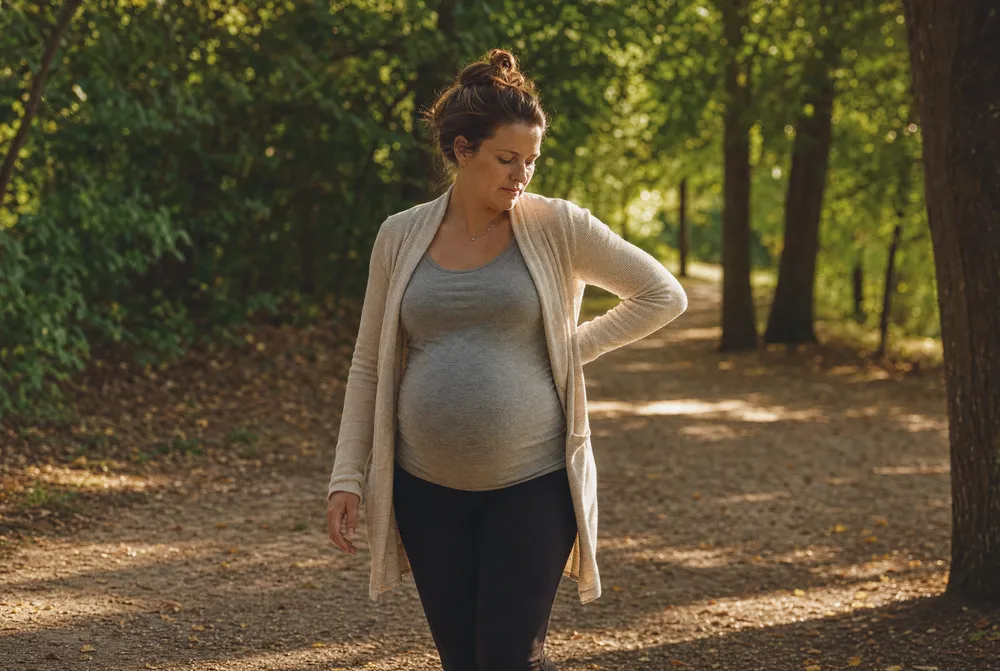
Pregnancy changes how your body carries weight, and it does it quickly. As the abdomen grows, your centre of gravity moves forward, the curve of the lower back deepens to compensate, and the ligaments supporting the pelvis soften under hormonal changes. Together those shifts put real strain on the lower back, hips, and pelvis.
Why discomfort is so common
Somewhere between half and three-quarters of pregnant women report back pain at some point. The usual causes are mechanical rather than mysterious: a forward-shifted load, a pelvis whose ligaments have loosened to prepare for birth, and postural compensations that develop gradually as the pregnancy progresses.
Where it usually shows up
- A deep ache low in the back, worse late in the day
- Sharp pain across the back of the pelvis or into the buttock
- Discomfort at the front of the pubic bone, especially when rolling over or climbing stairs
- Sciatic-type symptoms running down one leg
- Tightness through the hips that makes walking uncomfortable
What's different about prenatal care
Technique changes. Positioning is adapted so there's no pressure on the abdomen — often side-lying, or using a table that accommodates a pregnant belly. Force is reduced considerably, with an emphasis on gentle mobilisation rather than higher-velocity adjustment. And certain approaches are set aside entirely for the duration.
The goal is modest and practical: restore movement where the pelvis and lower back have stiffened, ease the muscular compensation around them, and help you stay comfortable and mobile as the pregnancy continues.
What a first visit looks like
Expect questions before hands. How far along you are, how the pregnancy has gone, where the discomfort sits, what makes it better or worse, and whether anything has changed recently. That history shapes everything that follows — and it's also how we identify anything that belongs with your OB or midwife rather than here.
When to talk to your doctor first
Chiropractic care is not a substitute for prenatal medical care, and some situations need your physician's input before any hands-on treatment. Speak with your OB or midwife first if you have vaginal bleeding, cramping, a high-risk pregnancy, placenta previa, preeclampsia, or any sudden change in symptoms. If you're unsure, ask — that conversation costs nothing.
Pregnant and dealing with back or pelvic pain?
Care during pregnancy is gentler and specifically adapted. Let's talk about what would help.