
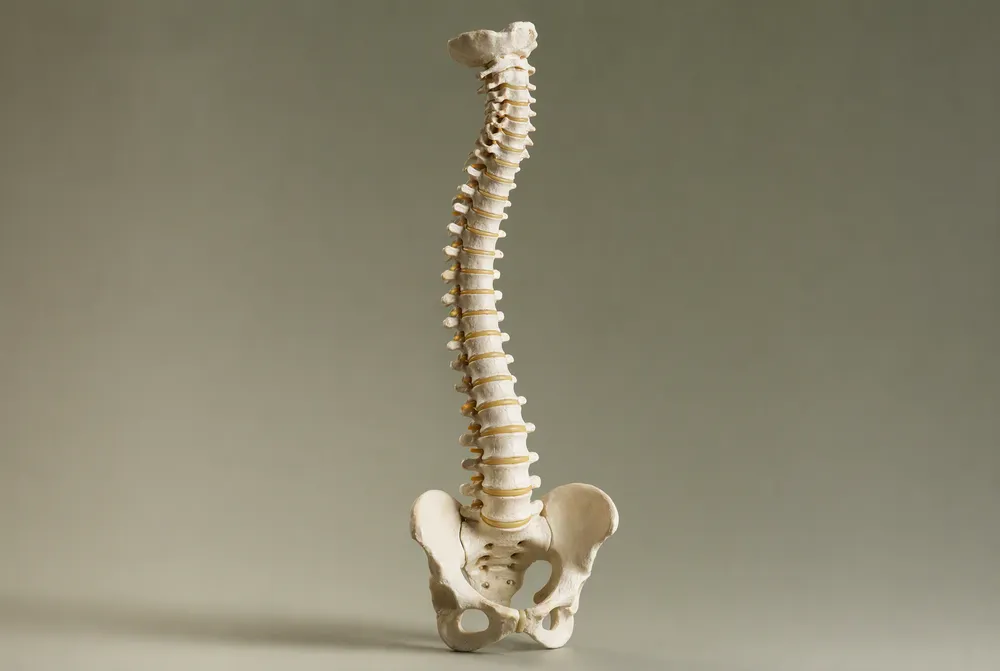
Scoliosis means a sideways curvature of the spine, usually with some rotation. Many adults discover theirs incidentally — on an X-ray taken for something else entirely — and are surprised to learn it's been there for decades without causing trouble. For most, that's exactly how it stays.
Two ways adults arrive at it
Some carry a curve that developed during adolescence and simply continued into adulthood, often unchanged. Others develop one later in life as the discs and joints of the spine wear asymmetrically — sometimes called degenerative or de novo scoliosis. The distinction matters, because the second kind is more likely to progress and more likely to produce symptoms.
What tends to prompt a visit
- An ache along one side of the back that outlasts ordinary stiffness
- Noticing one shoulder or hip sits higher than the other
- Clothing hanging unevenly
- Fatigue after standing for long periods
- Reduced flexibility turning or bending to one side
What conservative care can and can't do
This is worth stating plainly, because the internet is not careful about it. Chiropractic care does not straighten a scoliotic curve. Structural correction of a significant curve is the domain of bracing during growth, or surgery — decisions made with an orthopaedic specialist.
What conservative care can do is address the consequences of the curve: the muscular imbalance either side of it, the joints above and below that stiffen from compensating, and the pain that comes from both. Those are often the things actually making day-to-day life uncomfortable, and they respond well to treatment.
What usually helps
A combination of gentle mobilisation to keep the segments around the curve moving, soft-tissue work on the muscles carrying the imbalance, and — most importantly — targeted strengthening. Core and postural endurance work has better evidence behind it than almost anything passive, because a curve that's well supported by muscle behaves differently from one that isn't.
What to keep an eye on
Curves worth monitoring should be monitored properly, with imaging at appropriate intervals rather than by eye. Seek prompt assessment if you notice a curve that looks visibly worse, new numbness or weakness in the legs, pain that wakes you at night, or difficulty walking any distance. Those warrant specialist input.
Living with a curve and want a plan?
Conservative care can't straighten a curve — but it can make living with one considerably more comfortable.